




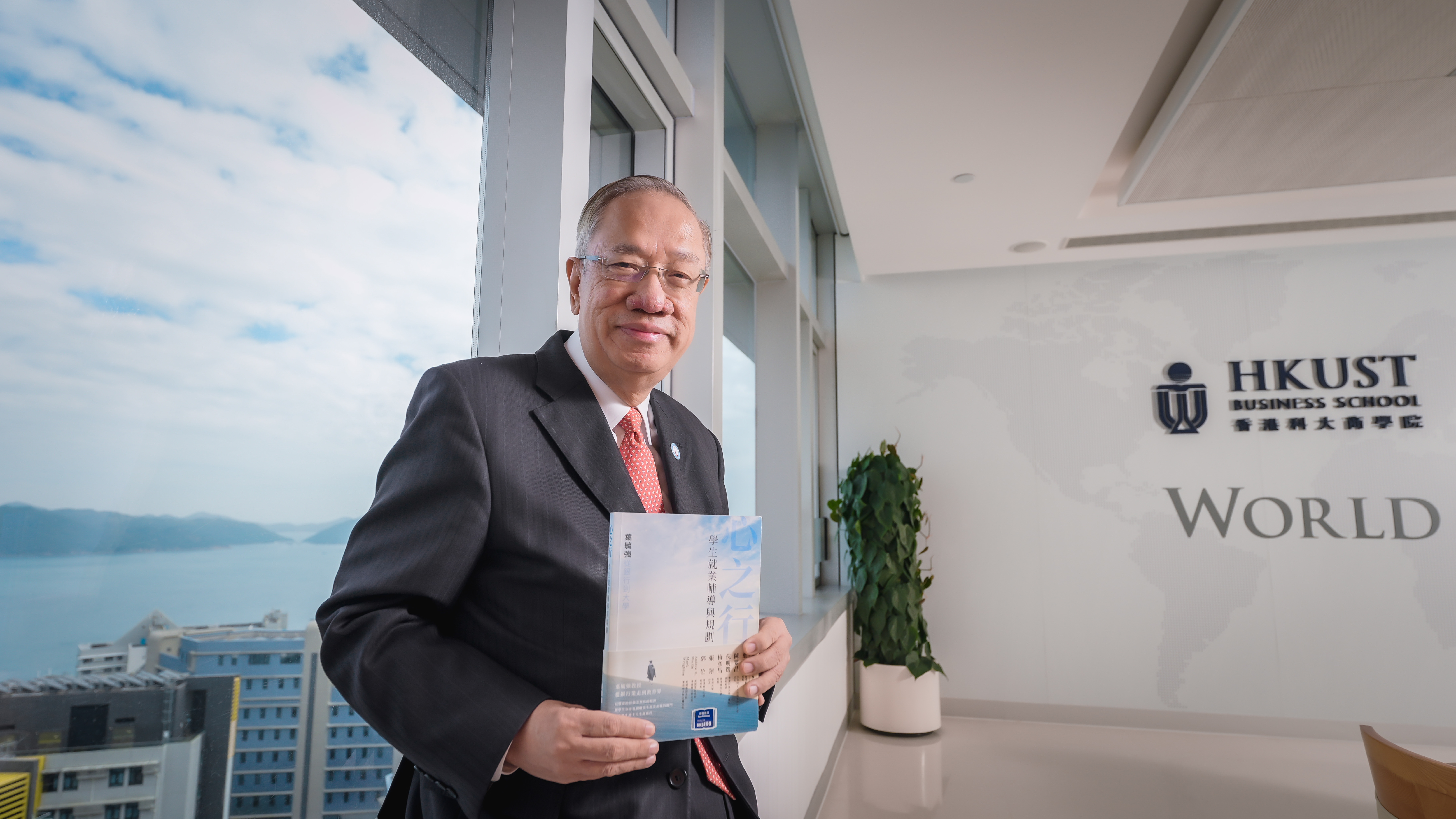
 Professor Albert IP, Chairman of the HKUST Foundation, Senior Advisor to HKUST President, Special Advisor to Dean of the Business School, and Chairman of the Business School's Career Development Advisory Council (CDAC), reflects on the University’s 35-year journey and shares his vision for how students can thrive in an increasingly complex, interdisciplinary and global job market.
While HKUST celebrates its 35th anniversary, Professor Albert Ip is seeing a university standing on the edge of its next transformation. With decades of experience in global banking and a portfolio of corporate board roles, he brings a pragmatic, forward-looking voice to the question he believes matters most: how should HKUST prepare students for a world defined by complexity, speed and constant reinvention?
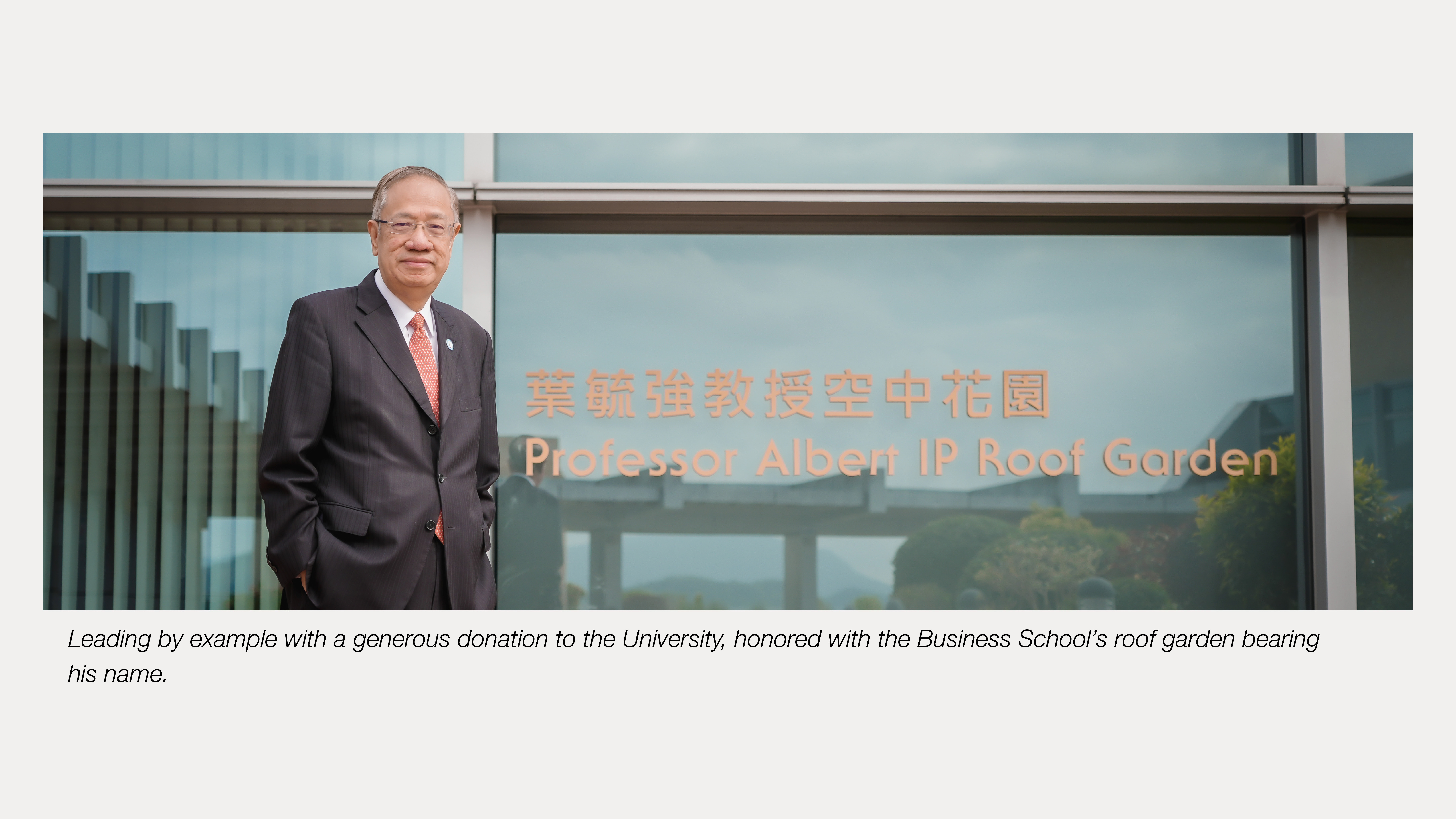
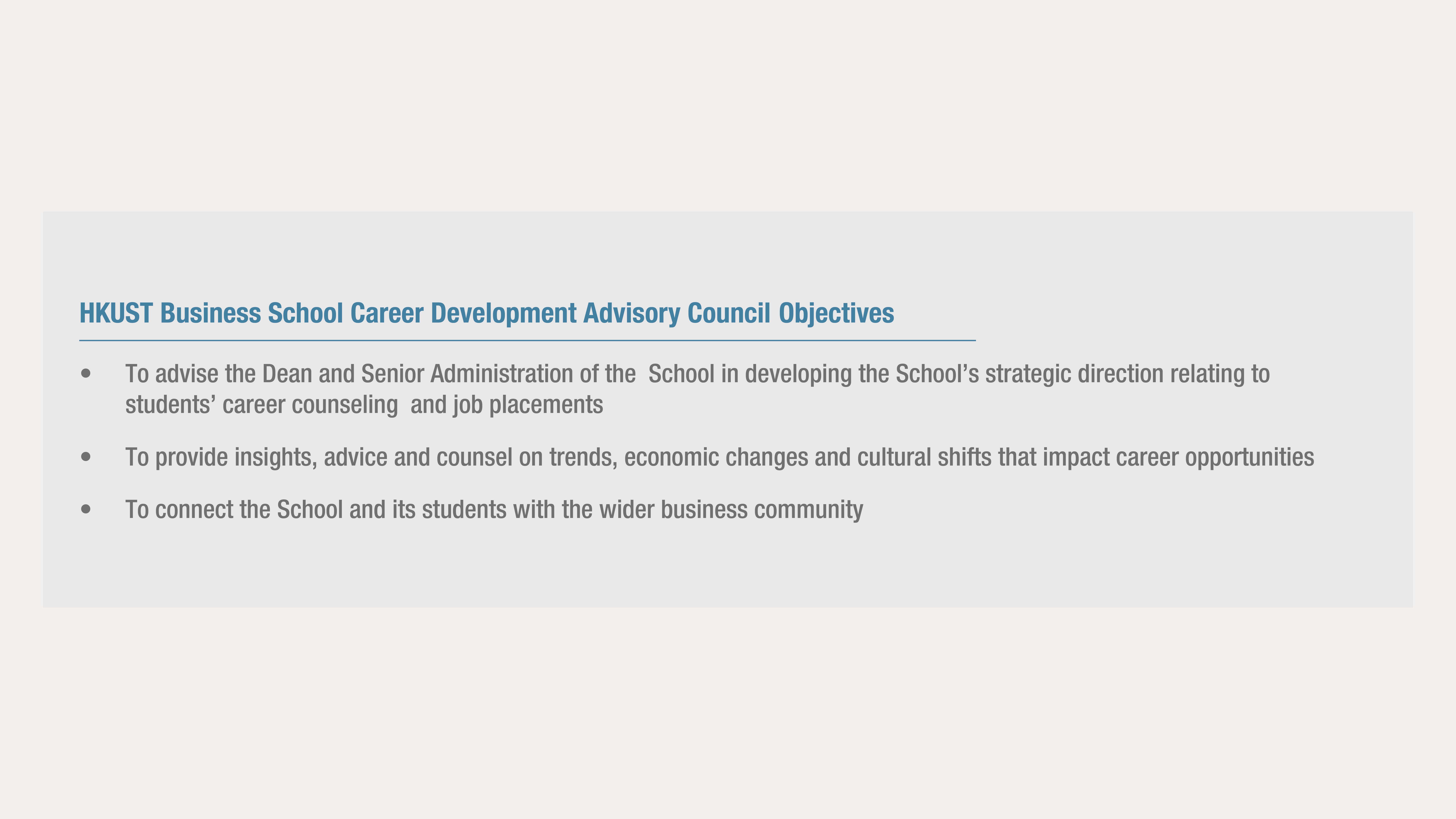
"l always tell people I am not smart," he says, "but companies trust me because they know I am practical, grounded, and I genuinely care about cultivating students to grow." That emphasis on action-oriented and human-centered approach shapes his leadership of the School's CDAC, which consists of ten distinguished senior corporate leaders in a broad spectrum of businesses.
For Professor Ip, the 35th anniversary is more than a milestone. It is a call to rethink what career readiness truly means and how universities can better equip students not just with academic knowledge, but with the mindset and adaptability needed to navigate an uncertain future.
From Mentoring to Counseling and Meaningful Career Matching
Professor Ip notes that students today face more choices than they realize, yet often limit themselves out of habit or perceived prestige. “Students tend to follow trends rather than their self-assessment of what may suit their background,” he says. “Career decisions shouldn’t be driven by what classmates are doing. They should be guided by strengths and long term interests.”
At the heart of his career advice is the importance of embracing a growth mindset. In his experience, the most successful individuals are those who perceive challenges as opportunities for growth rather than obstacles. Failures and setbacks are not endpoints, but are stepping stones to success.
In his experience, he has also found that students perform best when their attributes and passions align with the skills and types of talent companies are truly seeking. “Students will always do better in jobs they love,” he says.
Moreover, he urges students to explore fast growing areas such as sustainable finance, digital transformation, private equity, behavioural insights, fields where HKUST graduates can lead, not chase. “There are so many opportunities students haven’t even considered,” he says. “The world is changing, and they must widen their lens.”
Why Global Exposure Matters More than Ever
Global exposure, in Ip’s view, is one of the most powerful ways to broaden that lens. “I always encourage students going on exchange to take advantage of courses not available at HKUST, even if they may not count as credits for graduation. Exposure to different cultures, teaching styles and perspectives is something employers value more than students realize,” he explains.
Interdisciplinary Learning for an Interconnected Economy
Professor Ip also sees interdisciplinary learning as essential to HKUST’s next chapter. “The value of interdisciplinary studies, a double major or a major with another minor degree is becoming increasingly essential, for example pairing economics with math” he says. “Companies themselves are reorganizing along interdisciplinary lines.”
He argues that students should be encouraged to blend fields creatively—finance with data analytics, marketing with psychology, management with social science. “The more perspectives you bring, the more marketable you become. Employers are looking for people who can connect dots across disciplines.” Thinking out of the box, he adds, often leads students to opportunities they never initially imagined.
That same ability to “connect the dots,” Professor Ip adds, is transforming philanthropy and corporate engagement. “Cross selling in philanthropy is now the norm,” he says.
Another pillar of Professor Ip’s advice is the importance of building a robust network of mentors. Success, he says, is rarely achieved in isolation. Therefore he encourages students to actively connect with teachers, industry leaders and alumni. He has seen time and again how building these relationships can open doors. The 35th anniversary, in his view, is an ideal moment to deepen these partnerships and reinforce the University’s community value.
A Mindset for the Next Chapter
Passionate about guiding career success, Professor Ip counsels 40 students at the Business School each year, providing career guidance along with recommendations and referrals to companies. His influence now extends beyond the School and HKUST. As the founding chairman of the new Career Development Advisory Board in the School of Humanities and Social Science, he hopes to see more cross school collaboration in both curriculum and career support. In addition, he chairs two career development advisory committees at another university in Hong Kong.
He emphasizes that faculty should rethink their role in student development, moving beyond academic teaching to include practical application to foster broader knowledge while also including career advising in their teaching.
Reflecting on his ten-year journey at HKUST, which included six years as a Council Member, Professor Ip returns to a message that has become a constant in his counseling: humility, adaptability and curiosity will carry young professionals further than any credential. “Getting an HKUST degree is an important first step,” he says.
Looking ahead, Professor Ip envisions an HKUST career that embraces interdisciplinary learning, global exposure, employer partnership and a strong culture of alumni engagement. Holding dual roles as the Foundation Chairman and CDAC Chairman, he strongly believes in and supports student development, career counseling and alumni engagement, which complement each other not only in job referrals but ultimately in building a closely knit university.
Insights extracted from the Chinese book authored by Prof. Ip on career guidance for students
葉毓強教授《心之行:學生就業輔導與規劃》節錄
《心之行:學生就業輔導與規劃》一書,記述了葉毓強教授(Prof. Albert Ip)回顧其成長、學習、工作及輔導學生的心路歷程,並分享箇中體會。書中亦訪問了曾受葉教授協助的學生、共事過的大專院校同事,以及合作企業的管理層,透過多元視角的經歷與觀察,透視畢業生在職業規劃與求職路上可能遇到的挑戰,同時提供出路與建議。該書精彩節錄如下:
葉毓強教授
「學生無論資質如何,面對困難都不要放棄,應該認清自己的長處及短處,盡力發揮個人的優點:改善弱點,只要開放自我,便會發現社會為年輕人提供許多支援及關懷。」
「Mentor見完學生之後給予意見十分重要,因為這可啟發學生對社會的看法。」
「我感受到自己的付出真的能幫助到學生。譬如我遇過一個案例,學生有抑鬱症,我輔導他,後來他畢業後工作很好,之後在科技大學拿到碩士學位。」
香港科技大學畢業生吳嘉慧
「我知道Albert曾經是銀行高層,擁有很強的人脈。他問我申請了哪幾家銀行,看看他認不認識他們,然後問我怎樣準備面試。他替我做模擬面試,用僱主的角色來問我為何想要做這份工作。」
「找career team幫忙很有用,他們替我練習面試,又寫了推薦信,這兩部分是最有用的。」
香港科技大學副校長(行政)譚嘉因
「待人接物的技巧、正面的態度、自信心,我們未必可以在課室裏教授學生,但我們也累積了一些經驗,知道課外活動也可幫助他們培養這些特質。」
「實習或到外國做交換生,學生在自己不熟悉的環境中生活及學習四至五個月,這經歷是可以幫助學生,讓他慢慢去建立剛才談到的那些素質。」
富邦銀行行政總裁兼董事總經理鍾國強
「面試是很重要的一關,現在很多大學都會教學生怎樣面試,並提供模擬面試。面試能讓公司在很短的時間內認識求職者,從而決定是否聘請他。」
「我們對就業組的期望是替我們配對適合的學生。我們告訴他們技能要求,他們就看看有什麼學生適合,並通過課程、培訓、活動等幫助學生去裝備,投入社會。」
新世界發展有限公司執行董事趙慧嫻
「如今若要爭取一個職位,申請一份工作,競爭對象可能是一個在外國申請來港的人,所以一定要增值自己,別覺得讀完書,滿足於現有資歷。第二,現在競爭大了,申請工作時,一定要做好準備功夫。」
「在篩選的階段,首先要迎合職位需求,包裝好自己,令履歷突顯出來,例如申請市場部工作,加入自己曾參與的相關項目,自然比別人優勝。」