HKUST Business School’s DBA program alumnus Dr. Joseph CHEUNG shares how doctoral study sharpened his research mindset, strengthened his leadership, and deepened his commitment to giving back.
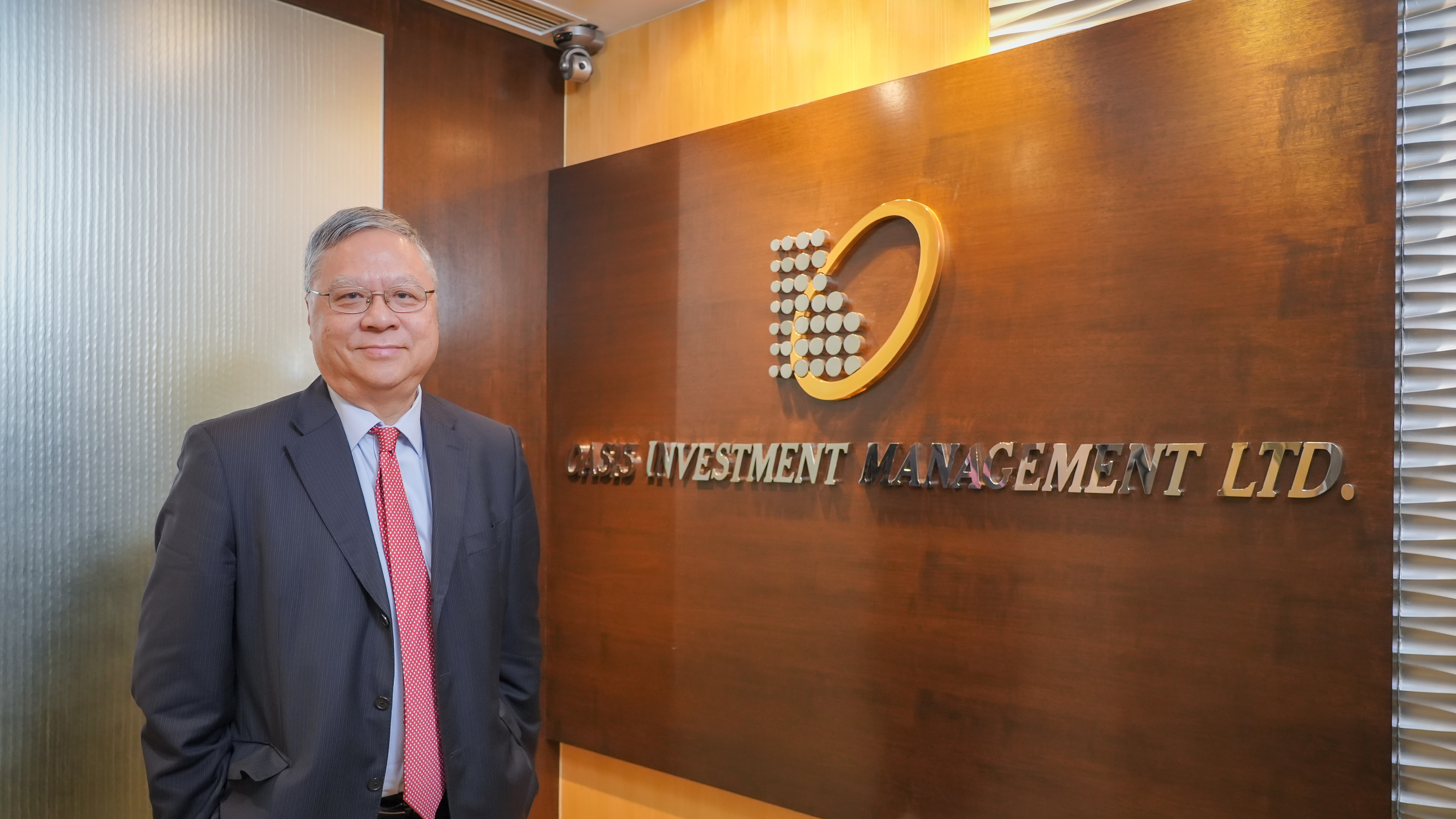
When Dr. Joseph Cheung joined the HKUST Business School Doctor of Business Administration (DBA) program, he had already built a distinguished career across law, accounting, finance, public service, and entrepreneurship. He was also the founder of an asset management firm and a biomedical start-up. Yet for Cheung, the DBA was more than another qualification. It marked both his seventh academic degree and the fulfillment of a lifelong ambition.
“Earning a doctorate has been a long-held aspiration since my undergraduate years,” he says. Having previously completed the Master of Science in Global Finance at HKUST, Cheung knew the University’s academic standards. So when the DBA program launched in 2021, he attended the online induction session and quickly saw the fit. “The program’s structure and vision resonated with me instantly,” he says. “I knew it was the right opportunity at the right time. The rest, as they say, is history.”
Driven by Curiosity
As a member of the first DBA cohort, Cheung says one of the most memorable aspects of the program was the caliber of his classmates: senior leaders from major global companies who approached each course with openness and humility. “What struck me most was the breadth of experience in my cohort,” he says. The classroom experience was marked by lively discussion and rigorous exchange. In one Econometrics module, the class continued more than two hours past the scheduled end time. “The professor later remarked that he had never witnessed such a profound learning ethos in an executive class,” Cheung recalls, and this shared enthusiasm became a hallmark of the program.
Thinking Beyond One Field
Praising the program’s broad curriculum, Cheung says it pushed him to think across disciplines, with modules spanning quantitative and qualitative analysis, marketing, management, accounting, finance, and other areas. “As a businessman or professional, it is not enough to know only your own field,” he says. “You need to understand other fields in order to engage meaningfully with others.” That interdisciplinary approach was especially important for Cheung, whose career already connects multiple domains. Though law, accounting, finance, entrepreneurship, and public service may appear separate, he sees them as deeply connected. “They allow me to make decisions through multiple lenses, minimizing bias and fostering a more holistic perspective,” he says.
Research with Practical Impact
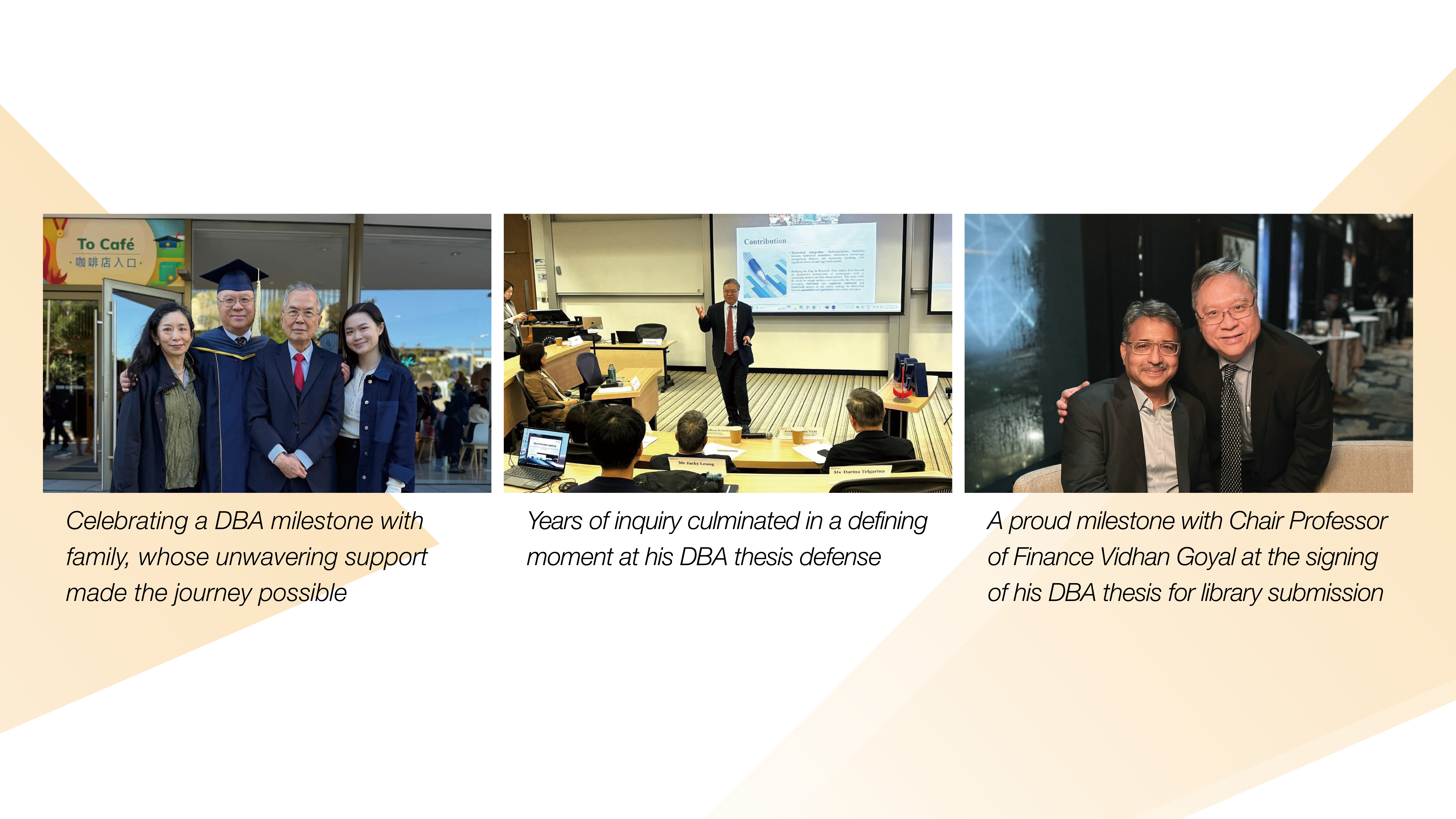
Cheung’s DBA thesis, Predicting Financial Restatements: Signals from Conference Calls, reflected his ambition to bridge theory and practice. “The essence of the paper is to use natural language processing to analyze whether the tone and behavior of CEOs and CFOs during conference calls reveal insights beyond the face value of financial statements,” he explains, noting that it was a rare achievement as his thesis passed without the need for amendments.
Under the guidance of Chair Professor Vidhan GOYAL, Cheung refined the topic into one that was practical and quantitatively verifiable. This had a direct impact on his work in investment management. “The research reinforced my long-standing belief in looking beyond the façade, whether in financial statements or other materials, to uncover deeper cues and insights,” he says. Modules in game theory and behavioral economics also enriched his investment philosophy, particularly in understanding crowd behavior and investor psychology during market volatility. “This helped me stay grounded in my investment themes during periods of market turbulence,” he says.
The research mindset has also shaped his public and academic service. Sitting on government and university committees, including panels that review research proposals from young scholars, he now approaches proposals “with the critical eye of a researcher.”
Values That Endure
The DBA has also influenced his leadership style, guided by three values: empathy, passion, and perseverance. “There are always multiple perspectives on any issue, and it pays to consider them,” he says. “Objectivity and passion are critical, but it is perseverance that ultimately enables success.” For professionals in senior roles considering a doctoral journey, Cheung’s advice is direct: Don’t be afraid to give it a try. “You can always find the time if you approach it with the right learning attitude and make adjustments to your priorities and routines,” he says. He credits HKUST faculty and administrators, like Ms. Lili CHEN, for supporting students throughout the process. “The professors genuinely have our interests at heart and are as invested in our success,” he says.
Paying it forward
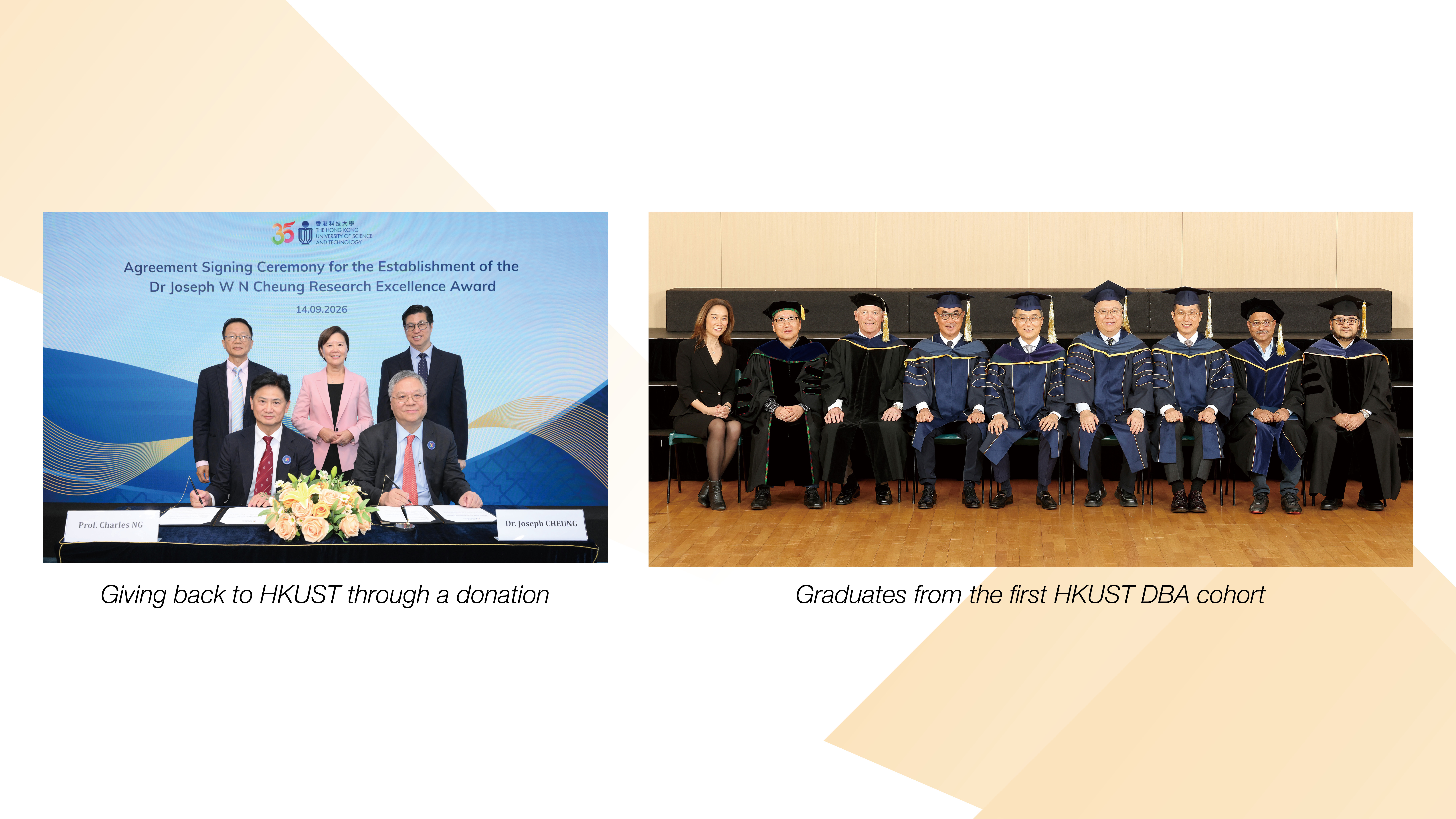
For Cheung, the DBA journey was never only about personal achievement. It was about sharpening judgment, widening perspective, and translating success into contribution. With the establishment of HKUST Medical School underway, Cheung approached the University to contribute $10 million to the development of the Medical School and $1 million to the Business School to support research excellence and nurture promising young academics.
“HKUST’s research excellence is unparalleled,” he says. “I hope this initiative will inspire more support from the community, especially our alumni, to advance research and education for generations to come.”