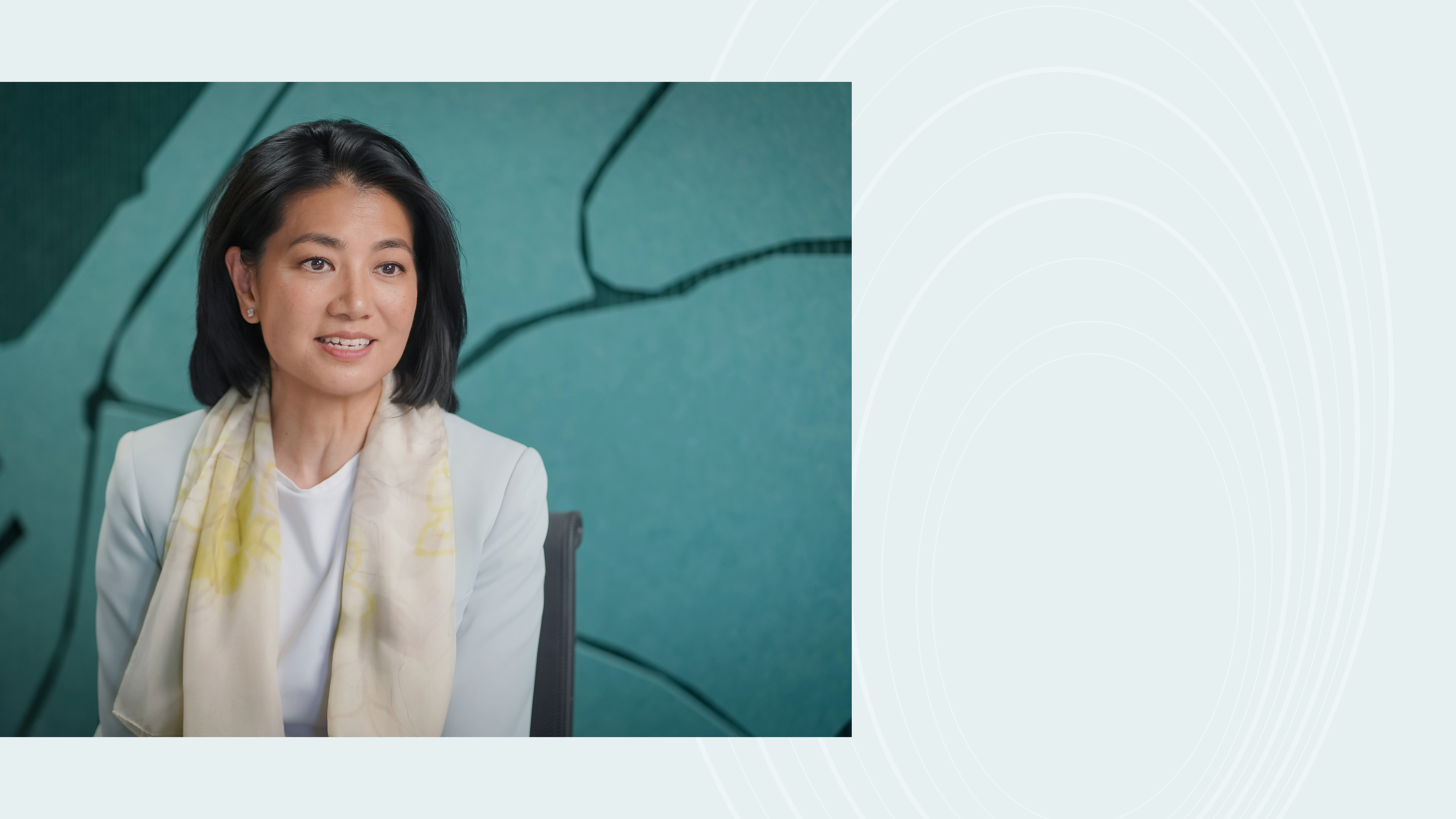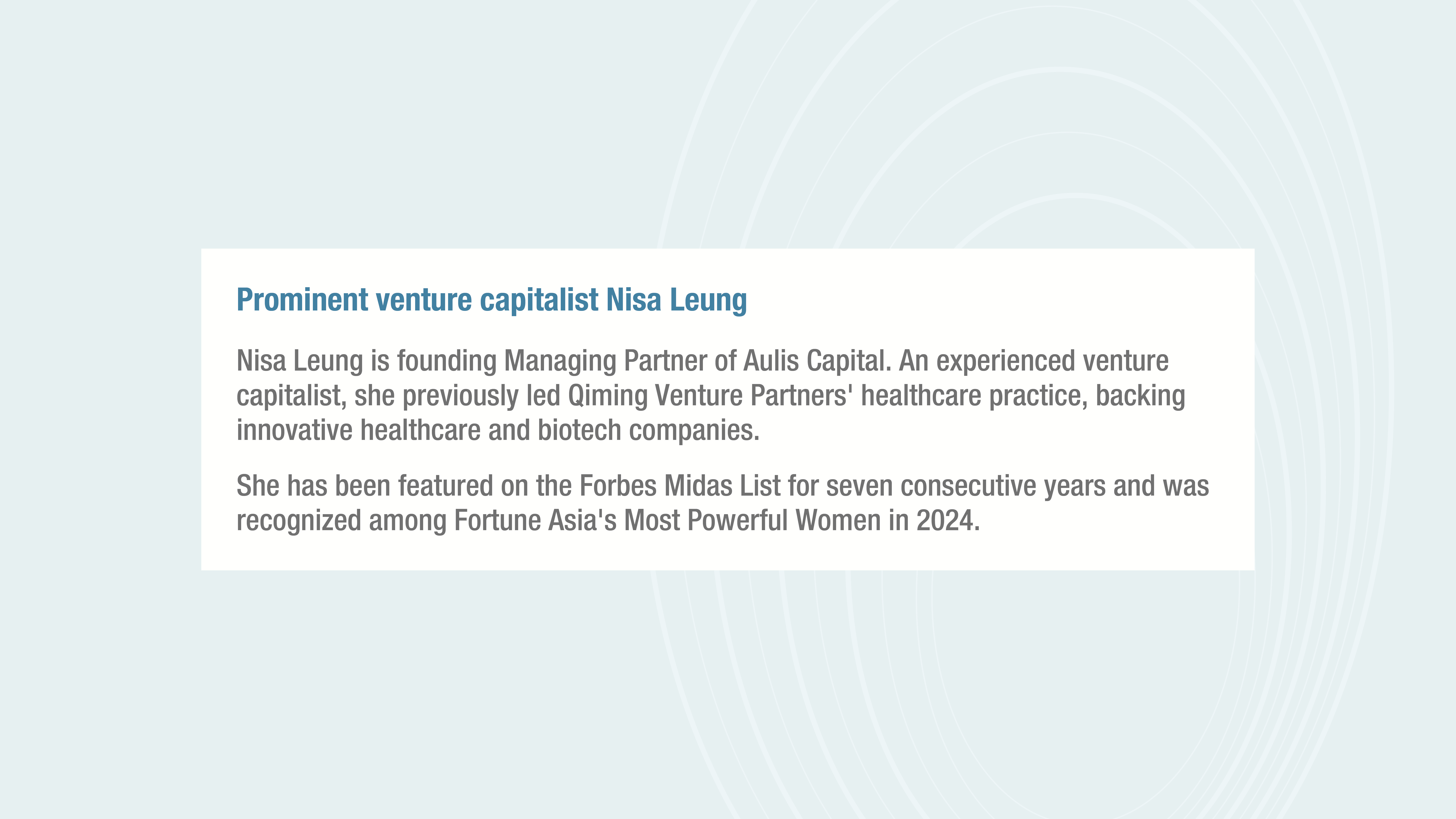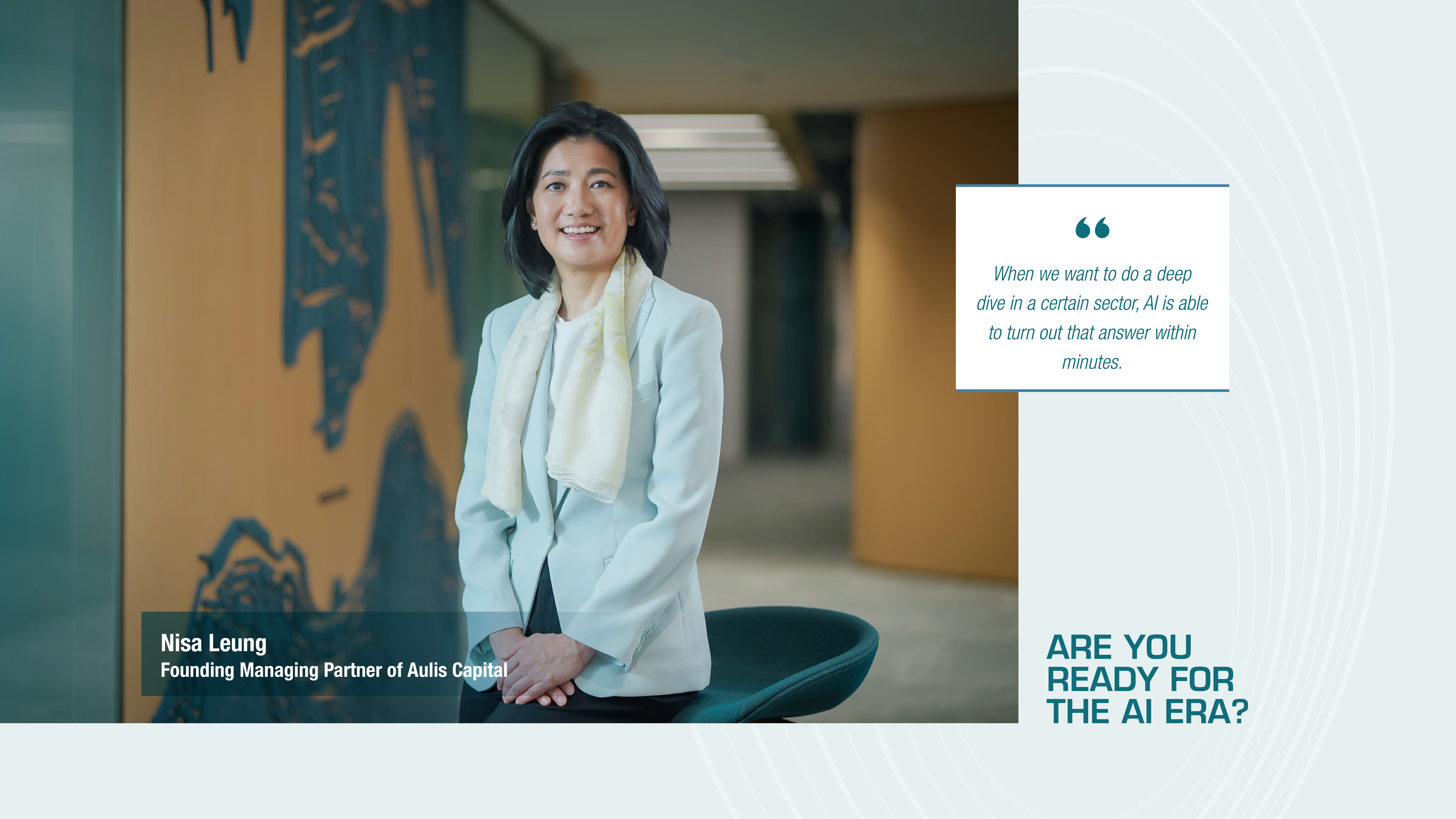
Nisa LEUNG, Founding Managing Partner of Aulis Capital, explains how new technology is driving digital health and drug discovery.
During her more than two decades in the venture capital field, Nisa Leung has witnessed multiple waves of technological disruption. None of them, though, compares to the impact of artificial intelligence (AI) which, unlike previous digital advances, is not simply creating new sectors and ways of operating. It is reshaping how capital is deployed, how innovation happens, and how scientific progress is evaluated.
As the Founding Managing Partner of Aulis Capital, Leung has been a long-time investor in healthcare companies, but accepts that AI is fundamentally changing the way venture firms go about their business.
“Having done this for 20-plus years, we have usually identified companies to invest in by meeting and understanding the entrepreneurs behind them,” she says.
The insights and instinct needed to recognize the vision and resilience that will lead to success remain constant. However, what has changed is what happens next.
“We now use AI to do scientific due diligence,” Leung says. “When we want to do a deep dive in a certain sector, AI is able to turn out that answer within minutes versus probably the week it would have taken before.”
Traditionally, investing in healthcare companies has required teams of highly trained associates, often with doctorates, to analyze complex scientific landscapes. Sector reviews could take days to check the research literature and do competitive mapping. Today, though, much of that work can be completed in minutes.
For example, Leung’s team recently used AI to analyze the current status of RNA (ribonucleic acid, a single-stranded molecule found in all living cells) therapeutics in China, Europe, and the US. They have also conducted similar in-depth searches on the latest developments in neuroscience.
The speed and accuracy of the information AI can generate has proved advantageous in other ways too. In particular, during live presentation sessions with company founders, it is now possible to cross-check claims and statements in real time and, thereby, to test assumptions, identify problems and map competitors on the spot.
“Using AI helps tremendously, and it has saved a couple of analyst and associate positions for us,” Leung says, noting that leaner teams can now manage broader portfolios, yet emphasizing the continuing need for good human judgment and executive insights. “AI is not replacing the managing partners or partners who make decisions about which company to back or not.”
In fact, good judgment matters more than ever in the AI era because if multiple funds rely on similar models and datasets, differentiation is not a matter of access to information, but of correct interpretation.
“People can often make very different decisions based on the same set of numbers,” Leung says, adding that experience, pattern recognition, and timing remain distinctly human advantages.
The overall result, though, is that a new venture capital model has evolved, one based on smaller teams, faster cycles, and AI embedded in operations and capital allocation.
Digital Health and Drug Discovery
In other respects, the impact on healthcare through better diagnoses, treatments and cures may be even more profound.
For more than a decade, Leung has been investing in digital health and AI-enabled medicine beginning with imaging and pathology. One company she backed now operates in hundreds of hospitals in China and is expanding rapidly, with the technology flagging small nodules that a radiologist might miss.
“My AI pathology company is saving lives every week,” she says. “It is a very good clinical co-pilot, not there to replace doctors or nurses, but to help them.”
This augmentation model reflects her broader philosophy, which is to use AI in healthcare to enhance professional expertise in the process of diagnosis, while also advancing AI-driven drug discovery, which she regards as the “Holy Grail”.
This led to early investments in companies such as Schrödinger, Recursion, DP Technology, Structure Therapeutics and Insilico Medicine, prompted by the knowledge that China had become strong in clinical trials and development work, but new tools were needed to improve early-stage target identification and molecular design.
Insilico Medicine uses AI platforms to accelerate front-end research in those areas and now has multiple prospective drugs at various stages of clinical development in the US and China.
“We won’t know the full impact of AI drug discovery until we have more phase two and phase three data,” Leung says, sounding a note of caution when explaining that regulatory approvals are the real test of how AI has improved timelines, costs and success rates.
Looking ahead, though, she sees new potential for tackling rare diseases and even developing brain-computer interfaces. If neural networks can be mapped at scale, AI may be able to analyze patterns in the brain which go far beyond human cognitive limits. Should that happen, it could open up new pathways to understand and treat complex neurological disorders and, thereby, broaden access to high-quality care.
Ethics and the Next Generation
However, one factor to consider is that competitive advantage can be short-lived, especially when cycles shorten and various technical barriers are being steadily removed.
“With AI, it is so much easier to develop a company,” says Leung, adding that any startup must therefore think carefully about how to achieve profitability and sustain an advantage. That requires not just a breakthrough idea or application, but also strategic partnerships, sufficient capital, a well-defined customer base and, ideally, early validation.
Businesses built around use of sensitive patient information, especially genomic data, must also take due account of long-term privacy concerns. For that reason, Leung avoids investing too heavily in data-intensive business models where the therapeutic value of an innovation remains uncertain.
That is an important principle at a time when some early-stage companies are raising capital at very high valuations. Drawing parallels with previous technology cycles, it seems clear not all will endure and that sound economics, not hype, will determine long-term returns.
Amid all this, Leung’s message for students and young professionals is optimistic. Some traditional roles may disappear, but new opportunities are emerging for those with AI skills and the ability to apply them creatively.
“We all have to learn,” she says, as someone who continues to experiment with building AI agents.
The future, she believes, lies in aligning technology with real human needs, which does not simply depend on access to information, but on asking better questions, exercising disciplined judgment and backing the right people.