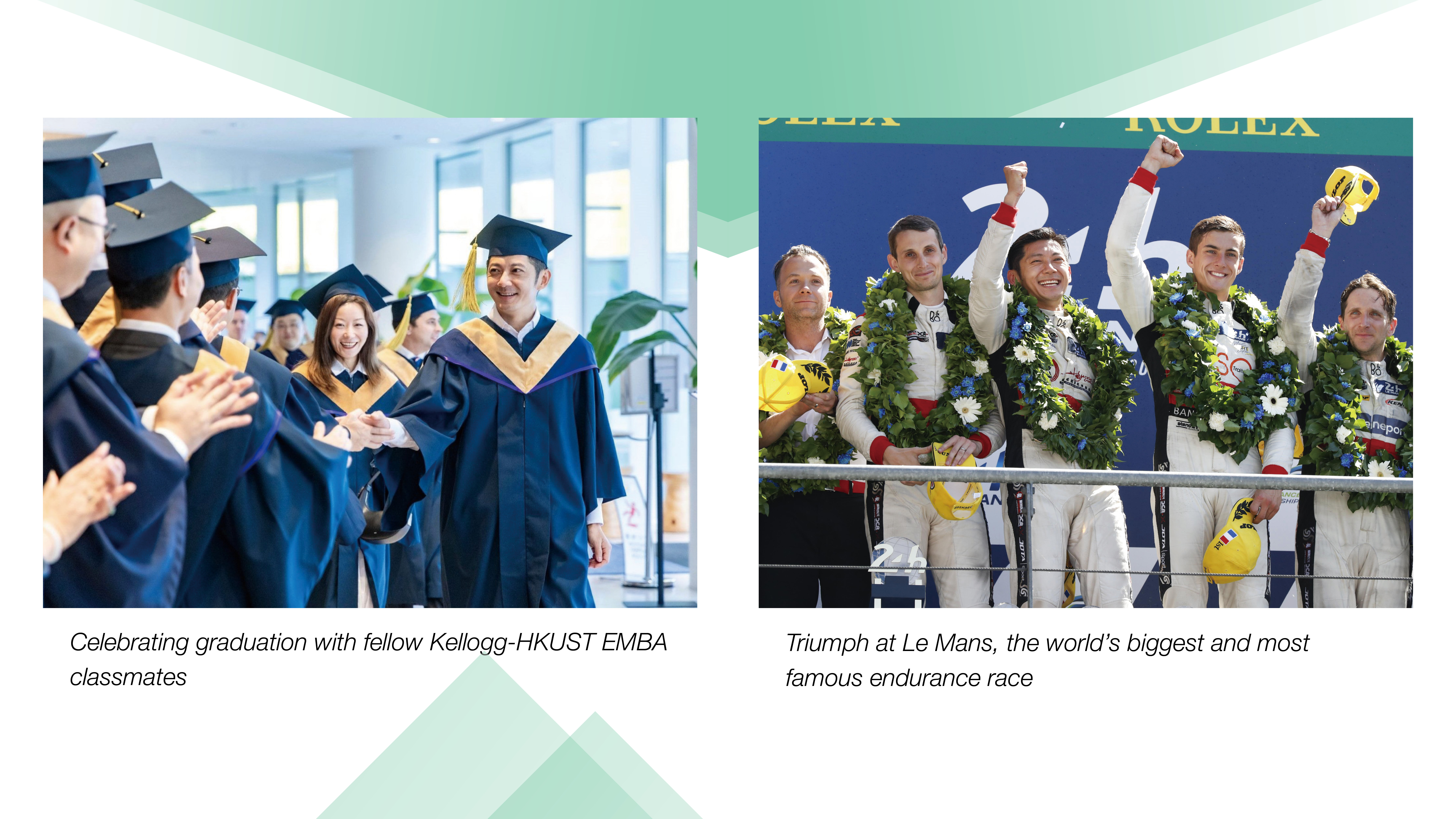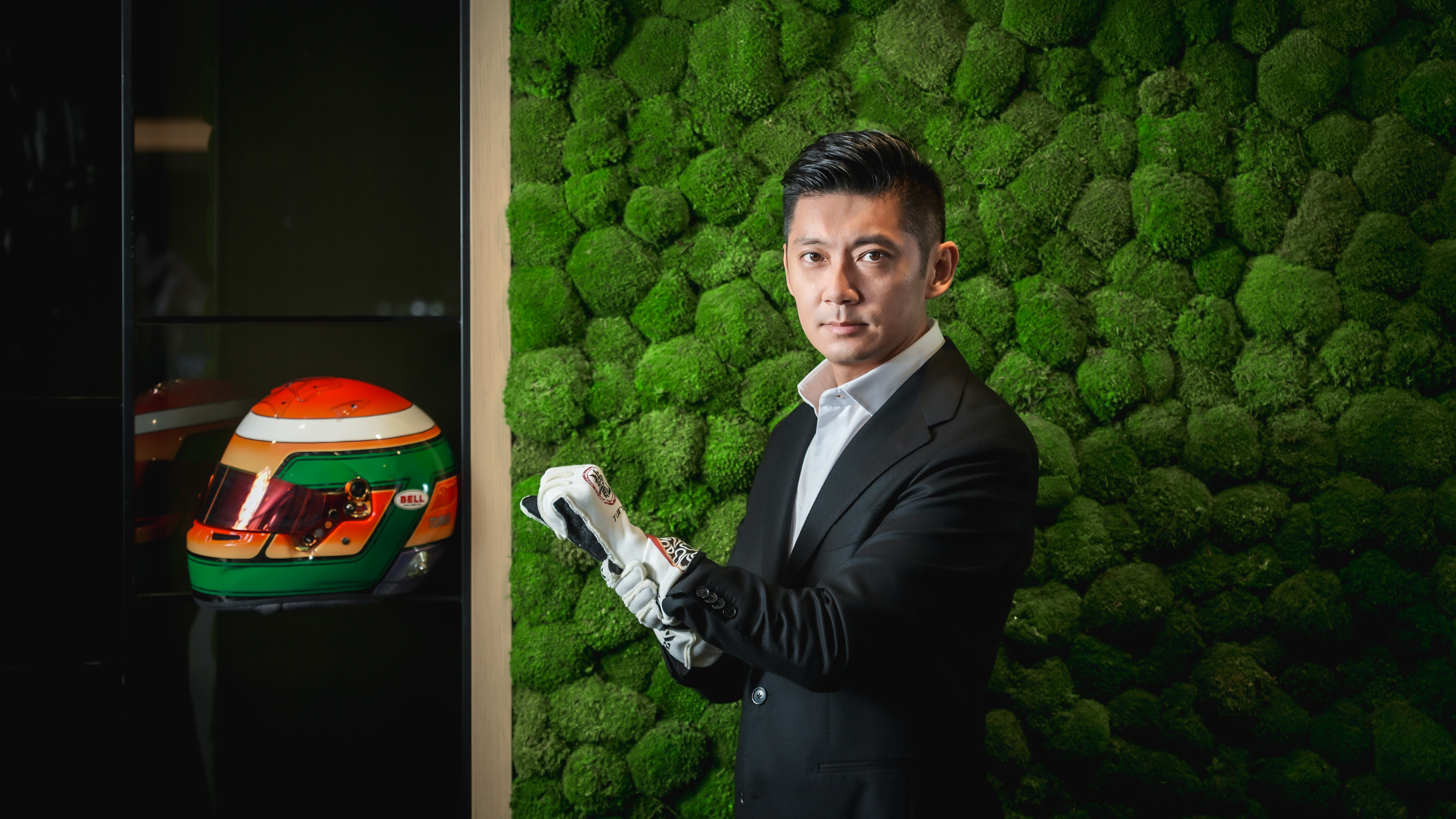
TUNG Ho-Pin (Kellogg-HKUST EMBA Graduate) —former F1 driver and now Director and Head of Private Office Hong Kong at Knight Frank—proves that reinvention is possible at any speed, showing how an EMBA helped a racing champion redefine leadership.
For more than two decades, TUNG Ho-Pin lived life at 300 km/h. A professional driver in the World Endurance Championship, a Le Mans winner, co-founder of a racing team, and a Formula One analyst, his world was defined by precision, performance, and split second decisions. Yet it was during the stillness of COVID-19 quarantine that he decided to take on a very different kind of challenge: an Executive MBA at Kellogg HKUST.
“I really wanted to go back to school. I felt this was something missing in my life because of my racing career,” he recalls. Years earlier, he had paused a dual program at Erasmus University to pursue racing full time, encouraged by a mentor who told him, “You can always come back to school.” The pandemic finally created that window. With global uncertainty and races postponed, he decided it would be time well spent to invest in his education.
Thanks to the School’s flexibility in delivering its curriculum during COVID, he gained confidence to move ahead at a time when few things felt certain. “Who knows what the world is going to look like? The flexibility really gave me the certainty to enrol.”
From Experience to Frameworks
Stepping into the EMBA classroom from a niche, high performance world, Tung worried he might not “catch up” with peers from banking, consulting, NGOs, engineering, and the casual gaming industry. Very quickly, those fears disappeared.
“Academically, the program really enabled me to sharpen my skill set and create more structure behind the things that I was doing,” he says. Courses like New Venture Discovery and Mergers & Acquisitions proved pivotal, linking intuition honed on the track to structured frameworks that broadened how he approached strategy and decision making. “Life is the best learning school, but education shapes the way you think and instils curiosity—especially on topics you may not be that familiar with.”
The varied backgrounds of the students reflect a core strength of the program and the broader values of the University. This diversity transforms the classroom into what he describes as a “gigantic think tank,” exemplified by a class debate on the Suez Canal blockage that brought together shipping executives, supply chain experts, and statisticians. “Different experiences, different expertise, all coming together to discuss major events.” It was, he says, one of the biggest surprises—and gifts—of the program.
East Meets West – Also in His Own Story
Born in the Netherlands to parents from Zhejiang, Tung embodies the program’s East meets West identity. “I’m Chinese, but I’m the first generation born in the Netherlands—very Western education, but with Chinese culture and respect instilled,” he says.
Hong Kong allowed him to bring those identities together. He calls the city a “super connector and global gateway,” a place where ambition meets opportunity. Sometimes, he adds, “I feel I’m able to appreciate Hong Kong more than people who were actually born here.”
A New Career Lane: From Motorsport to Property
After graduation, the strength of the Kellogg HKUST network became tangible. Through a classmate, he was approached by a headhunter for his current role as Director and Head of Private Office Hong Kong at Knight Frank, one of the world’s leading property consultancies.
“People always rave about the network in executive education, and I can really confirm that,” he says. The transition from motorsport to property may sound unconventional, but to Tung, the parallels are clear. Running a racing team—managing sponsorships, operations, and long term strategy—gave him tools directly transferable to corporate leadership. “In the end, whether it’s business or sport, I truly believe in creating value and adding value to people’s lives.”
Redefining Leadership, Embracing Lifelong Learning
Tung insists the EMBA changed not only his CV, but his way of thinking. “I’ve always been very structured, but after the program I’m much more structured in the way I operate at work.” It broadened his worldview, strengthened his confidence, and deepened his belief in resilience, adaptability, and lifelong learning—values that have guided him from racetracks to boardrooms.
As HKUST celebrates its 35th anniversary, Tung’s message to the next generation is simple: stay curious. “Don’t take things for granted. Stay curious and engage in lifelong learning, especially in this rapidly changing environment.” After all, as he puts it, “No one can predict the future, but the University equips us with tools to make a much better guess.”