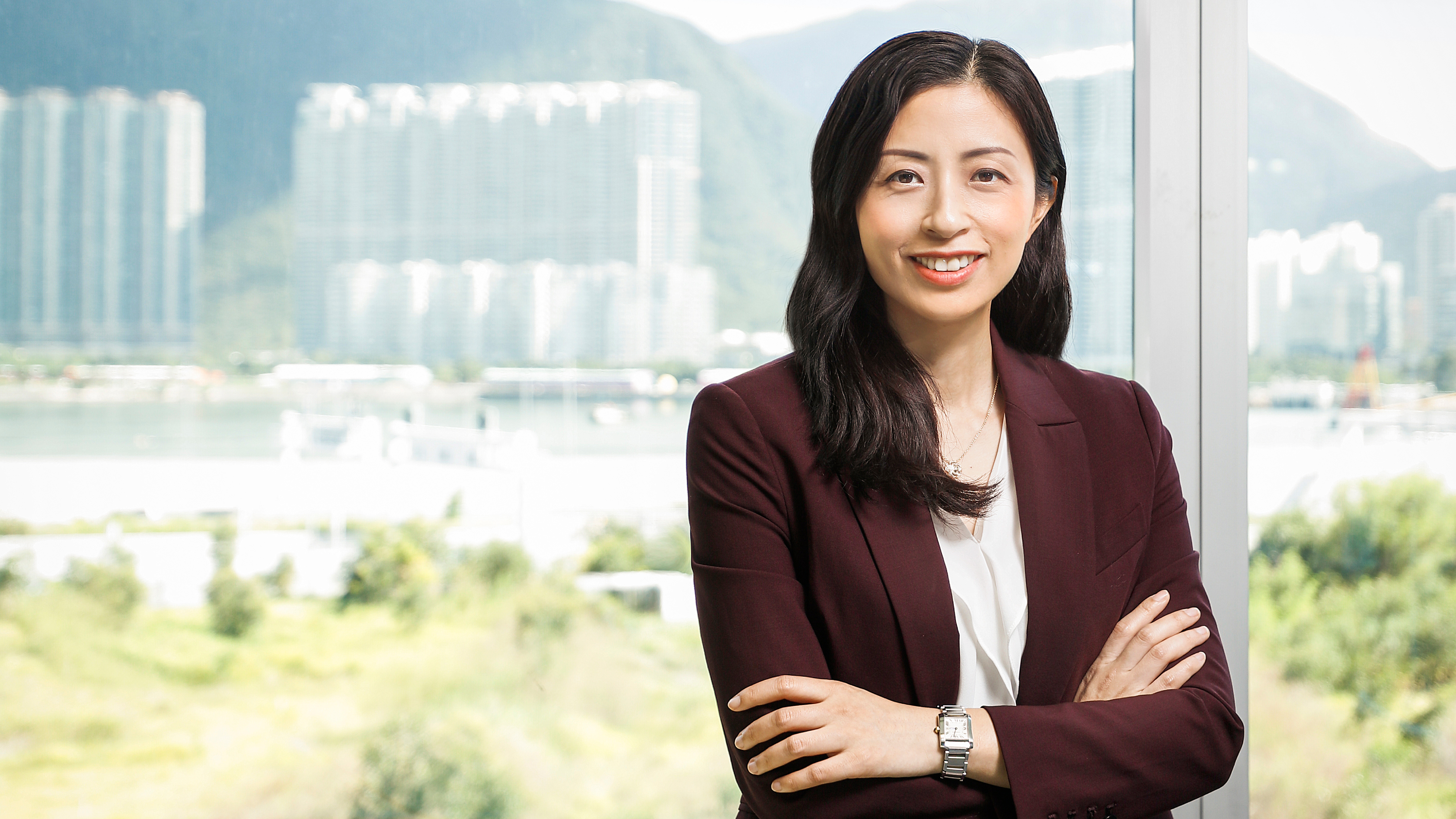
For Jeanette MAO, CEO of HK Express Airways (Graduate of HKUST MSc in Financial Analysis and BEng in Computer Science), a willingness to accept new challenges has defined her rise to the top of the industry.
With Hong Kong now fully reestablished as a major hub for global aviation, there are exciting prospects for further growth, new routes, and ever better choice and connectivity within the Asia region.
Creating and capitalizing those opportunities is front and center for Jeanette Mao who, as CEO of HK Express Airways, is responsible for the carrier’s strategic direction and key operational decisions to ensure passengers enjoy a travel experience that is safe, efficient and affordable. That mission now plays out against a fast changing industry landscape shaped by fuel price volatility, economic cycles, geopolitical tensions, and shifting customer expectations.
“My management approach is to stay anchored in clarity of purpose and to show agility in execution,” says Mao, an HKUST alumna, who completed both an MSc in Financial Analysis and a BEng in Computer Science. “As a company, we focus relentlessly on what we can control: safety, operational reliability, cost discipline, and delivering real value for our customers. At the same time, though, I encourage the team to experiment, learn quickly, and adapt with confidence.”
Secrets of Success
Since assuming her current position in mid-2023, Mao has found that success is not a matter of having a perfect plan, but of making timely decisions, staying close to staff, and building a united organization where people move forward together.
Those priorities remain, but she also recognizes that, in future, the best airlines must be more data-driven and increasingly nimble in responding to new demands, without compromising core value propositions.
Meanwhile, lessons learnt at HKUST and during 20-plus years with the Cathay Group continue to guide her, in particular the belief that if you want to improve, you have to step outside your comfort zone.
While climbing the career ladder, she did that by taking on nine challenging roles with three different airlines. Doing so provided crucial experience in cargo operations, inflight products, service delivery, sales and distribution, strategic functions, and passenger business.
Importantly too, it allowed her to develop a personal code of practice, or her own “three R’s”, for self-improvement and advancement.
The first of those is to reflect on the specific lessons from each role. The second is to reframe them for the new context, carefully assessing what will still apply and what should change. The third is to reapply the transferable aspects such as leadership skills and critical thinking, with a few tweaks where necessary.
“Past experience should be a strength, not a constraint,” Mao says. “It should inform you, but never box you in.”
Emphasis on Openness
As a leader, her day-to-day approach is further defined by a complementary trio of imperatives: clear direction, trust, and empowerment. This puts everyone on the front foot, while also encouraging open discussion and a positive outlook.
“People perform best when they understand where the organization is going, why their work matters, and how they contribute,” Mao says. “Therefore, we place a strong emphasis on communication by holding regular town halls and engagement activities at different levels. In this way, our teams stay aligned, informed and connected to the company’s overall strategy and purpose.”
If venturing into unfamiliar territory or facing decisions with long-term implications, Mao always values the perspectives of peers and mentors. She also seeks out people with relevant domain expertise and first-hand experience, and believes that building diverse teams adds to the company’s collective wisdom.
“I don’t need to be an expert in every area,” she says. “Instead, my role is to create an environment where people can speak up, challenge ideas, and experiment without fear of failure.”
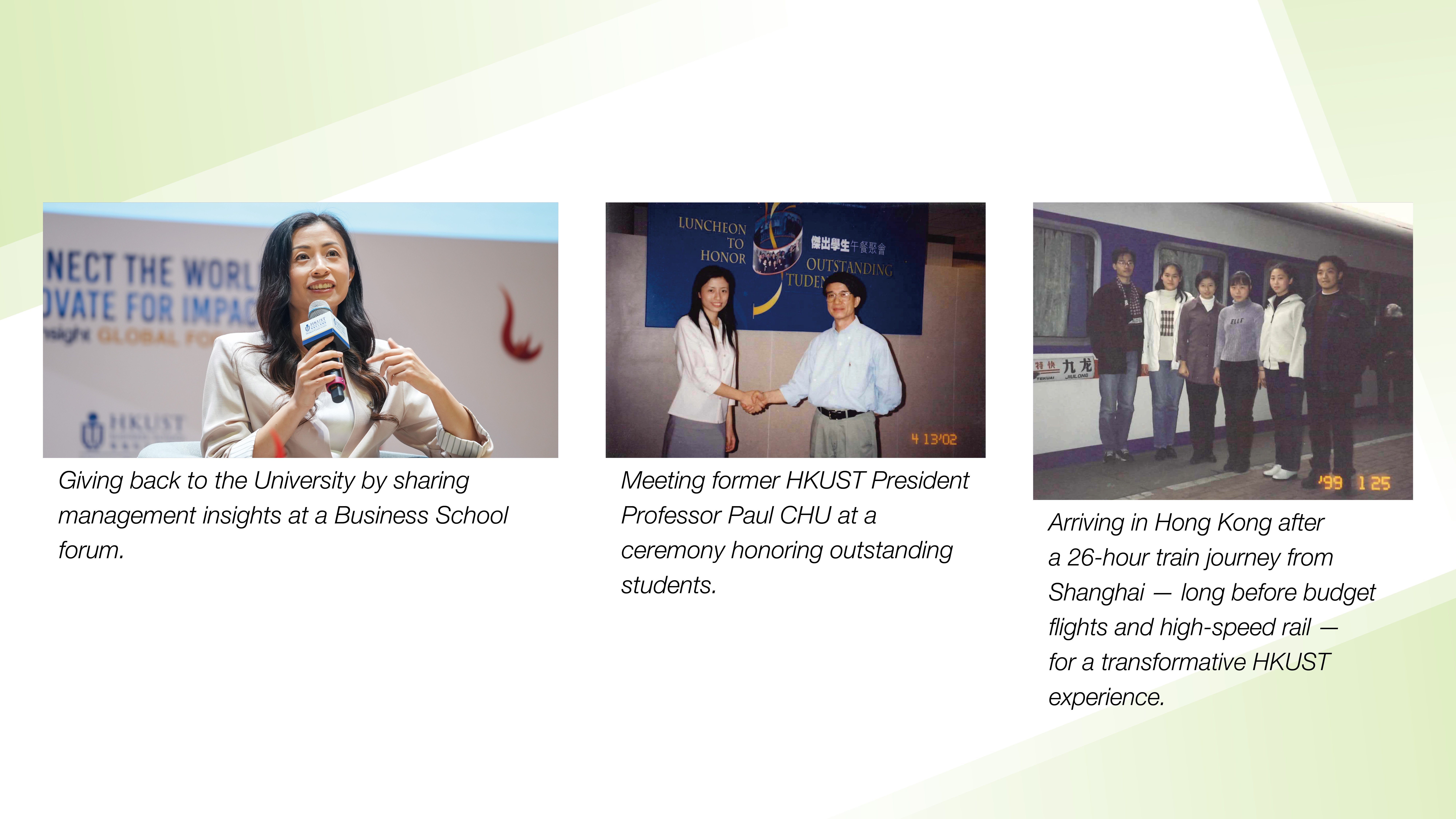
The University’s respect for such ideals was one reason she opted to study at HKUST back in 1998. Coming from Shanghai as one of the first batch of undergraduates from Chinese Mainland, she soon saw the benefits of resetting her aims and ambitions.
“Pursuing an MSc at HKUST allowed me to broaden my perspective and become more well-rounded. It was also a conscious decision to challenge myself again—balancing work and study while learning from classmates with diverse professional backgrounds. The opportunity to sharpen my financial skills and analytical judgment, combined with the thoughtful discussions and lasting friendships, made the learning experience deeply meaningful,” she reflects.
“HKUST didn’t just educate me academically; it reshaped how I think,” Mao says. “It taught me to question assumptions, embrace diversity, and stay curious. Those formative years laid the foundation, helping me become a lifelong learner and leader.”